Give a story character a visual direction.
Start with a permitted reference and describe a few details from your story: an outfit, an expression and a setting. Use the portrait to compare visual possibilities while keeping the writing and character decisions your own.
Create a character4 credits for one standard image. New accounts receive 4 starter credits. See current pricing.
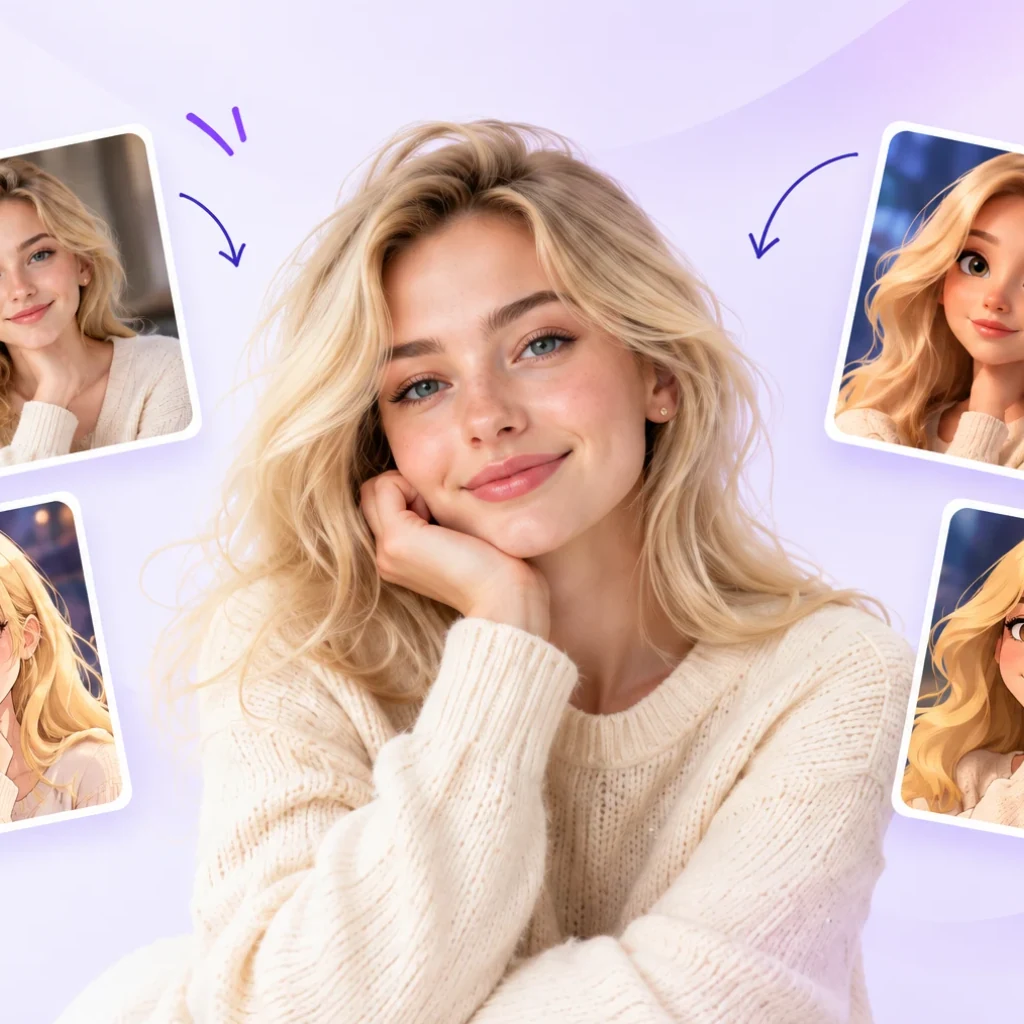
From your reference to a result.
Choose a visual starting point
Upload an original sketch or a fictional adult portrait you may use. Morrow’s current flow starts with an image.
Write a compact brief
Name the mood, one costume detail and the setting. Decide which reference features must remain recognizable.
Choose a medium
Fantasy creates a painterly concept direction; Anime, Cartoon and Realistic offer different treatments. Use the style gallery to compare them.
Keep useful versions
Compare the result with your written brief. Download useful portraits and return to your main reference for later scenes.
What happened in this test.
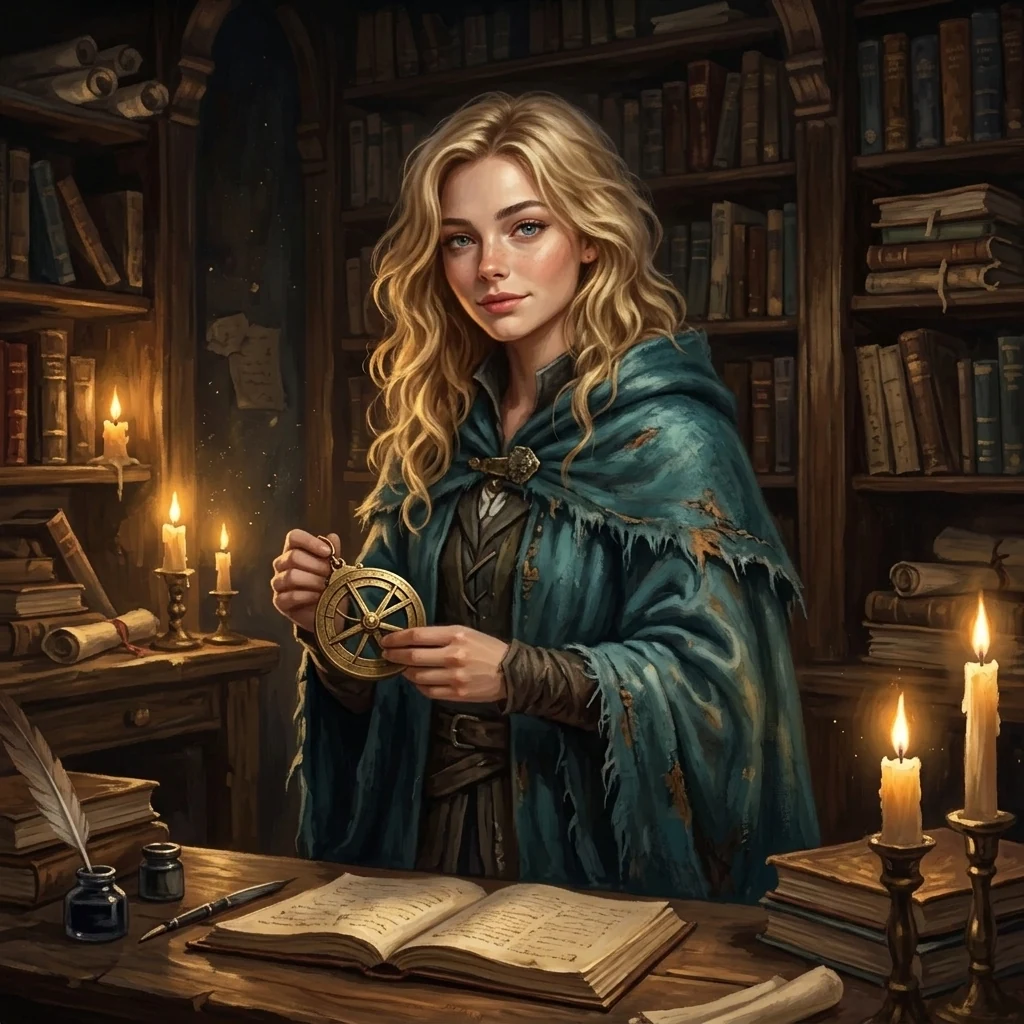
This is one recorded result, not a guarantee for every reference.
Visible in the output
- The fictional blonde adult reference became a fantasy archivist portrait with blue eyes, a worn teal cloak and a brass astrolabe in a candlelit library; a writing desk and open book are visible.
What this does not establish
- One portrait cannot establish multi-scene character consistency or a finished book-cover design.
- The test input was cropped homepage artwork with four inset style cards. The prompt explicitly selected only the central fictional adult; this was not a clean single-person portrait benchmark.
Test conditions and recorded prompt
Fresh current-formal-source isolated API, SQLite/media account, real Kie generation and SeeAPI moderation; not production Cloudflare or public-account verification.
Model: nano-banana-2-1. Operation: generate.
Visual style (fantasy): Render painterly fantasy character concept art with richly textured clothing, atmospheric depth, luminous accents and a believable imagined setting. Keep defining facial features and hairstyle recognizable from the reference where visible.. User request: Use only the central fictional adult blonde woman in the reference as the visual basis for Mira, an adult fantasy-novel archivist. Keep her recognizable face, blue eyes and wavy blonde hair. Give her a weathered teal cloak, a small brass astrolabe and a candlelit library setting. Create one half-body fantasy character portrait for a writer, with no collage, cover title or lettering.. Character generation. Half body
Build a visual reference for your writing.
Use the recorded archivist example above to plan a visual brief, then follow these steps with your own permitted reference.
Write a short visual brief
List visible traits to keep, one costume and one setting. The tested brief requested a teal cloak, brass astrolabe and candlelit library.
Recorded for this portraitCreate and inspect one portrait
Upload, confirm the crop, select Fantasy and add the visual brief in A few details. Compare the whole output with your source before selecting it as your character.
Start with FantasySave the reference you accept
Use the workspace save-to-character action and give the character a name. Reopen it from My characters for later versions. Saving makes the selected image the main reference; check your character-space allowance.
Plan scenes and review continuity
In More options choose Scene set and review all four descriptions. Keep the style stable, then compare every result with the chosen reference.
Use the identity review checklistDownload the images you want to keep
Open each successful creation, inspect its full image and download it. Generated versions are workspace-accessible for 30 days. Keep the exported images as visual references while you develop the writing and layout.
What the recorded example covers
The isolated site test verified one archivist portrait. The following saved-reference and Scene set steps describe the existing tools; this portrait has not been tested through that complete sequence.
One standard portrait: 4 credits. An optional four-scene set: 16 more, reserving 20 credits for the two requests. Downloading existing results uses no generation credits. Check the displayed costs and each task state.
Pricing and character spaces · Check character views · Credits and task status
Before you spend credits.
- This is a reference-based portrait workflow, not an automatic character biography or story-writing service.
- Start with a few visible details rather than a whole chapter. A short brief makes it easier to judge whether the image follows your intention.
- Check costume, props and setting for unwanted additions. A plausible-looking detail may still contradict your story.
The starter grant covers one standard image. It is a trial, not unlimited free generation. Sets, editing and background removal have separate costs. Read the credit and failure answers.
Common questions.
Does Morrow write the character’s story?
No. This page covers the visual portrait workflow. Biography, dialogue and plot remain outside the current image tool.
Can it create a book cover?
You can explore an image direction. Finished cover layout, typography, print dimensions and rights checks require additional work.
Can I change the scene without redesigning the character?
Use the same saved main reference and make a focused scene request. Review every result because clothing and facial details can drift.